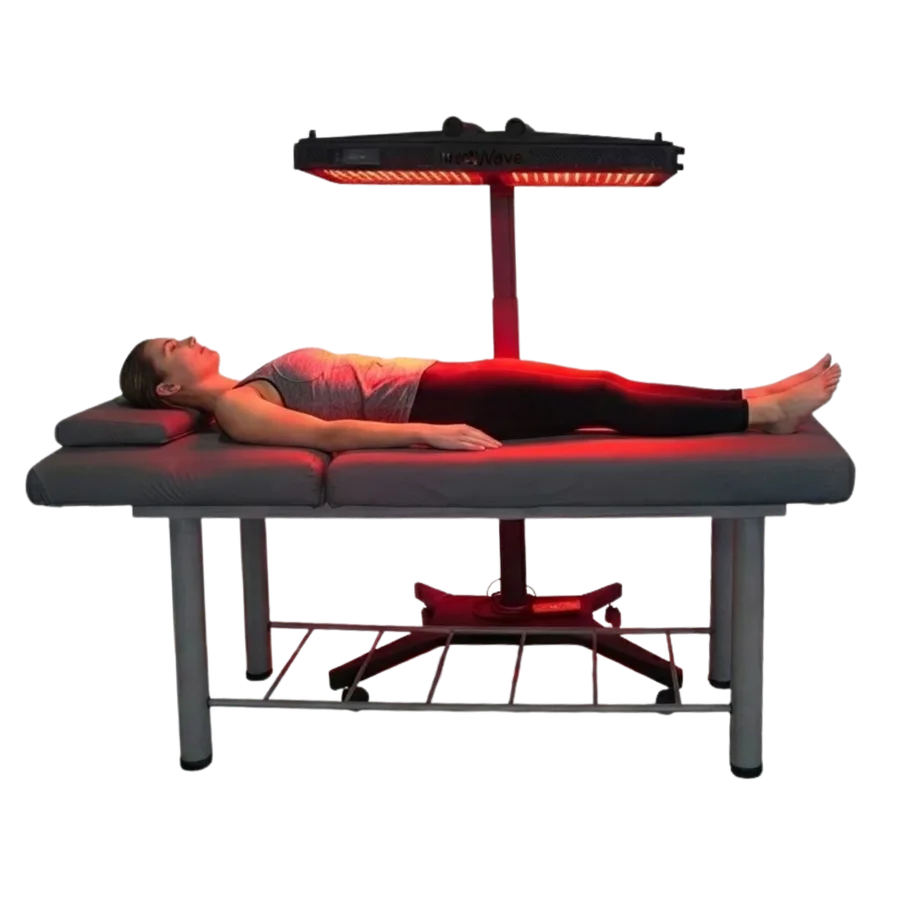
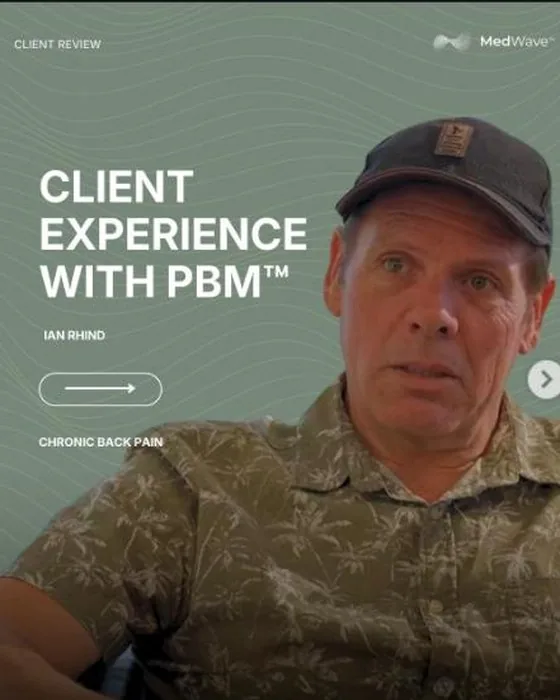
Red light therapy, explained without the hype. Twenty quiet minutes under the MedWave Neuro-100S — no heat, no needles, no medication, no downtime — working across all four of MedWave's clinical areas in a single dual-wavelength system.
Message me on WhatsApp to check availability and book your first session.
Photobiomodulation — better known as red light therapy — uses specific wavelengths of red and near-infrared light to trigger a natural response in your cells. No heat. No needles. No medication. No recovery time. You simply lie in front of the panel for ten to twenty minutes.
It isn't new: the underlying research goes back over fifty years, with a large and growing body of peer-reviewed science behind it. Photobiomodulation is non-thermal and contains no UV — it does not burn, tan or damage skin.
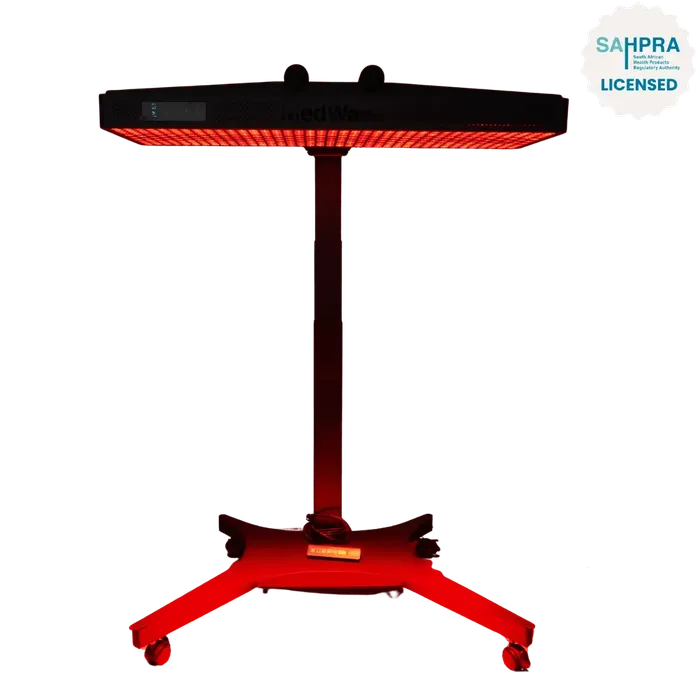
At Beauty by Hanna, I use the MedWave Neuro-100S — a dual-wavelength system designed and manufactured in South Africa and built with premium European components. MedWave is a SAHPRA-registered medical device establishment.
Light isn't only something you see. At the right wavelength, your cells can use it as a signal — and four things follow.
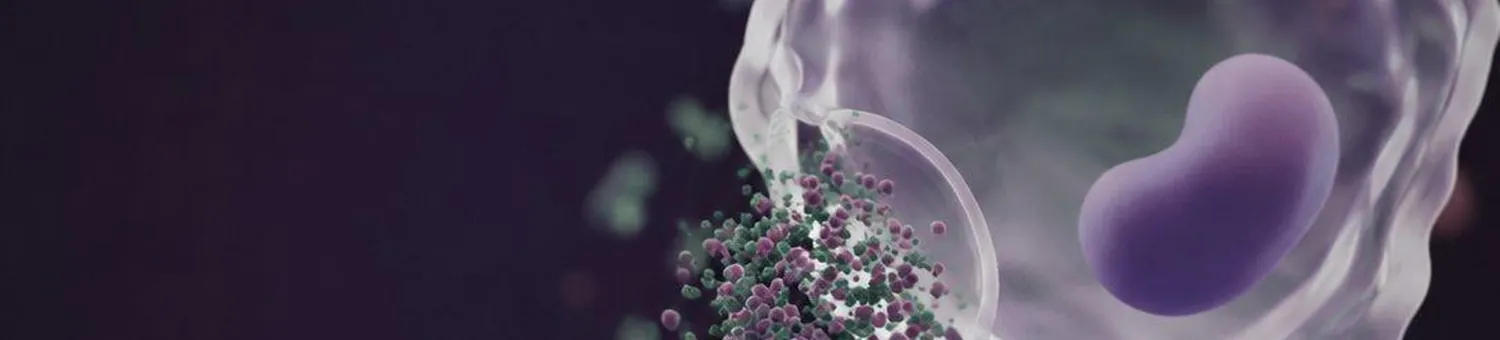
Mitochondria absorb the light and produce more ATP — the fuel your body runs repairs on.
Nitric oxide is released, widening vessels and delivering more oxygen where it's needed.
Light helps regulate the signals that keep tissue inflamed.
More energy, better circulation, calmer inflammation. Your body does the rest.
Photobiomodulation is non-thermal and contains no UV. It does not burn, tan or damage skin.
MedWave builds two panels: the Optimum-100S for skin and metabolic work, and the Neuro-100S, which adds near-infrared light for pain and deep tissue. Mine is the Neuro-100S — it runs both wavelengths, 635nm red and 810nm near-infrared, so one panel covers all four of MedWave's clinical areas. Each wavelength reaches a different depth, which is why a single session can work on surface skin and deep muscle, joint and nerve tissue at the same time.
A sore back. A skin concern. A stubborn few centimetres. What surprises them is the rest — because red light works on cellular energy, not one isolated symptom. It isn't instant. It arrives quietly, usually around week three.
Deeper sleep, faster recovery, more in the tank — most people notice it from about week three. Red wavelengths don't suppress melatonin the way blue screen light does, so an evening session won't cost you the night. Researchers link the effect to better mitochondrial function and cerebral blood flow overnight (Sleep Medicine Research 2024;15(4):218–227).
May help ease period-related discomfort by supporting circulation and settling inflammation. Same treatment as any other session — many find one is enough to make a real difference.
Nitric oxide release widens blood vessels, delivering more oxygen to tissue that's trying to repair itself — the quiet engine behind most of the other benefits.
MedWave's work sits in four clinical areas. Because the Neuro-100S carries both wavelengths, every one of them is on the table in my studio. Here's what the published research says about each — so you can see where it might fit into your own routine.
A lower back that never settles. A shoulder that complains overhead. Heel pain that ruins the first ten steps of the morning. Near-infrared light at 810nm reaches past skin into muscle, joint and connective tissue, where it supports circulation and helps settle the inflammation that keeps pain going. Commonly worked on: lower back, neck and shoulders, knees and hips, elbows, heels, hands and wrists.
From your mid-twenties, collagen production drops every year. At 635nm, red light reaches the fibroblasts — the cells that make collagen and elastin — supporting firmness and tone over time. The same wavelength prompts fat cells to metabolise stored energy rather than hold onto it, which is where centimetre loss across waist, thighs, hips and arms comes from. Red light does not remove fat cells, and it works with movement and hydration, not instead of them.
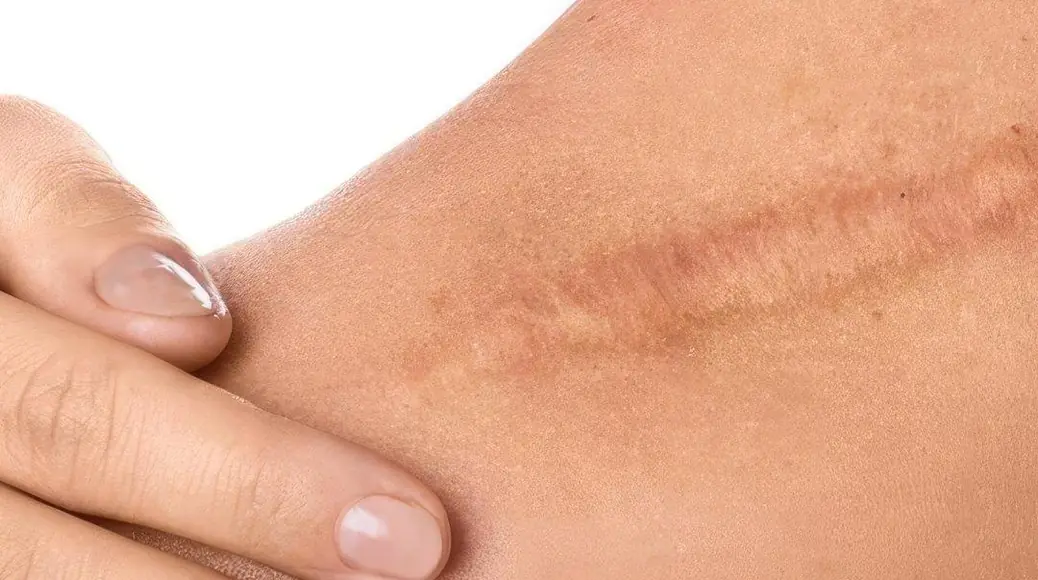
Some wounds don't close on schedule — surgical sites, slow-healing skin, stubborn scarring. When cells run short of energy, repair slows down. Light energises the fibroblasts that rebuild tissue, supports the formation of new blood vessels in the wound bed, and helps move the area out of a prolonged inflammatory phase into a repairing one. It's also used in postpartum recovery — caesarean and perineal soft-tissue repair — where sessions are entirely non-contact, so nothing touches the site. Used alongside your existing wound care, never instead of it, and whether it suits you is your doctor's call.
Nerve tissue is among the most energy-hungry in the body. When the mitochondria powering it underperform, discomfort lingers and recovery slows. Red and near-infrared light is absorbed by those mitochondria, restoring ATP production and helping regulate the inflammation that builds around irritated nerve tissue. It also supports blood flow, bringing oxygen and nutrients to tissue that is trying to repair itself.
Please read this bit. Whether your own situation sits inside one of these areas is a conversation for a qualified clinician — this page is general education, not a diagnosis. Nerve-related symptoms and any wound should always be assessed and managed by a healthcare professional. Red light therapy is supportive care, not a substitute for it.
Aching joints. Skin that has lost its firmness. Tissue that repairs more slowly. Broken sleep. Less in the tank than there used to be. If you'd rather add something gentle to the week than another tablet, this is the part of the page for you.
Red light does not act on hormones. It acts on the mitochondria inside your cells — raising ATP production and supporting local circulation.
That distinction matters, and it's the honest one. But much of what changes in the years around menopause sits downstream of the hormonal change rather than in it. That downstream ground is exactly where the panel works — alongside whatever hormonal care you're already having, never instead of it.
“I'd built my life around the pain. After two months it stopped running my days — and two years on, it still isn't.”
She is MedWave's client, not mine — I'm sharing her account because it's the clearest one I've read. She lives with diagnosed endometriosis and secondary dysmenorrhoea, severe enough that she once fainted from it in public. She used the panel for two months, alongside the care she was already having.
Published by MedWave with her written consent. This is her account of her own pain, not of her condition. Individual results vary. Red light therapy is a complementary adjunct — it is not a treatment or cure for endometriosis or any other condition, and it does not replace the care of your doctor.
Whether any of this suits your own situation is a conversation for your doctor, and that comes first. Nothing here is a diagnosis.
Red light therapy is cumulative. One session feels pleasant. A course of sessions is what changes things.
Typical frequency is two to three sessions per week, with at least 24 hours between them. We'll set the right schedule for you at your first visit. Individual results vary.
A full-body session is 20 minutes — 10 minutes facing up, 10 facing down — for complete front-and-back coverage. Targeted work on a single area is shorter, usually ten to fifteen minutes. You lie ten to twenty centimetres from the panel. It's warm and quiet; some people fall asleep. No needles, no pain, no downtime, so you go straight back to your day.
Book two to three sessions a week with at least 24 hours between them. Results are cumulative — the research points to around 8 sessions as the clinical minimum for a lasting course.
Your goals, health history and any medication. A few conditions need clearance from your doctor first.
Skin clean and dry — no makeup, no lotion. Protective eyewear goes on, and it is not optional.
Ten to twenty centimetres from the panel. Warm and quiet. Some people fall asleep.
Targeted sessions are shorter. Full body is ten minutes front, ten on the back.
No downtime, no marks. Drink water and keep moving — it helps the work along.
Half price, once per person. Not a rate you can book again — it's here so you can feel the treatment before committing to a course.
My most-booked package — the clinical minimum, and enough sessions to see visible, lasting results across your goals.
For clients who are fully committed to the results and want to make it part of their routine.
The full course at the lowest per-session rate I offer, for a specific goal — centimetre loss, long-standing pain, or recovery after a procedure.
This page is for general information only and isn't medical advice. Please consult your doctor if you have a medical condition or are unsure whether this treatment is right for you.
Not at all. Most clients describe it as warm and relaxing — similar to lying in gentle sunlight. There's no heat damage, no needles, and nothing invasive about the process.
No, and no. Sunbeds use UV light. Red light therapy uses none — it's non-thermal and contains no UV at all, so there's no burning, no tanning and no skin damage.
Two to three sessions a week, with at least 24 hours between them. Research generally points to a clinical minimum of around 8 sessions for a full, lasting course — which is why Restore (8 sessions) is my most popular package. Most clients then move to maintenance, one to three sessions a week. A half-price Trial Session is there if you want to feel it first, and Thrive or Goal if you want to go further.
Honestly: red light does not act on your hormones. It works on the mitochondria inside your cells, raising their energy production and supporting circulation in the tissue being treated. But a lot of what changes in these years — aching joints, skin losing firmness, slower repair, broken sleep, less in the tank — sits downstream of the hormonal change rather than in it, and that downstream ground is exactly where the panel works. It sits alongside whatever hormonal care you're already having, never instead of it. More on this here.
Some effects are immediate — relaxation and short-term easing of pain from the first session or two. Most change builds over four to eight weeks: pain and stiffness shift durably around week two to three, early centimetre loss becomes measurable around the same time, and collagen changes show in tone and firmness from week four to six. Individual results vary.
Only the area being treated — light has to reach skin to do anything. I'll talk you through exactly what's needed before we start, and you're in a private room throughout.
Photobiomodulation is non-invasive, non-thermal and drug-free, and has been used clinically for decades. It's generally very well tolerated. Protective eyewear is mandatory during every session. A few conditions need clearance from your doctor first — pregnancy, a current or previous cancer diagnosis, epilepsy or seizure history, thyroid medication, light-sensitising medication, bleeding disorders, and pacemakers or implants. Please chat to me before booking if any of these apply.
None. No marks, no recovery period — go straight back to your day. Drink water afterwards and keep moving; it helps.
Full session and package pricing is on my pricing page. Sessions can't be booked online — message me on WhatsApp and I'll check availability and talk you through which package suits your goals.
Come with clean, dry skin — no makeup and no lotion, as some products react to light. Comfortable clothing, and if you can, light-coloured underwear, since darker colours absorb more of the light. Otherwise no special prep. I'll take care of the rest.
Photobiomodulation is backed by a large body of independent, peer-reviewed research spanning pain, wound healing, skin health, neurological health and more. Browse the full list of studies here — every entry links straight to the original published research.
MedWave's photobiomodulation technology — the same platform behind the Neuro-100S I use in studio — is trusted by some of South Africa's top athletes for recovery and performance. Here's what they have to say.
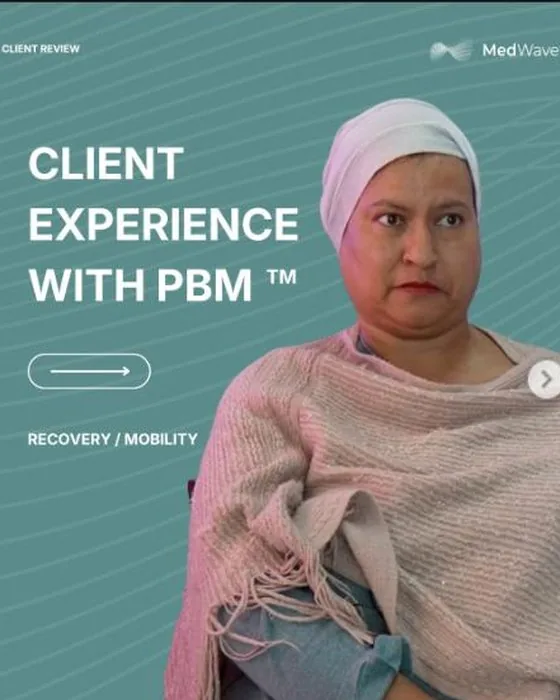
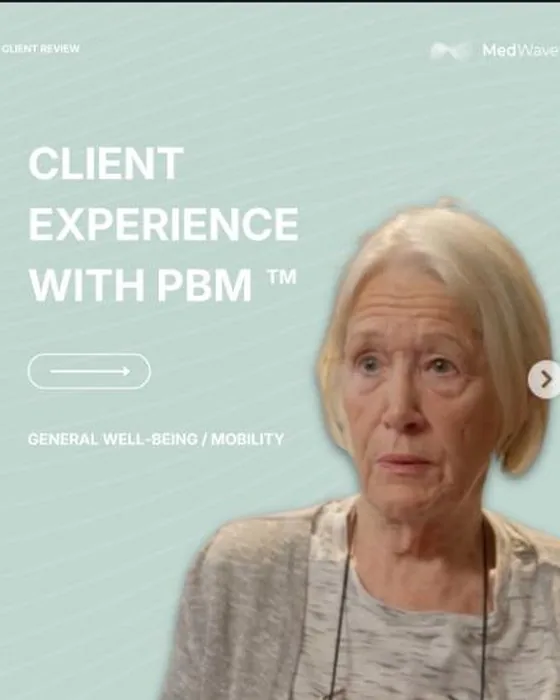
From healing and pain relief to everyday wellbeing and long-term health, here's what people are saying about their experience with photobiomodulation.
A behind-the-scenes look at MedWave, skincare tips and studio life — new videos posted regularly.
You don't need to commit to a course to find out whether this works for you. Message me and we'll start with a baseline — measurements or photos — so you can see what actually changes.
Or call/WhatsApp 072 177 7300 · See full pricing